
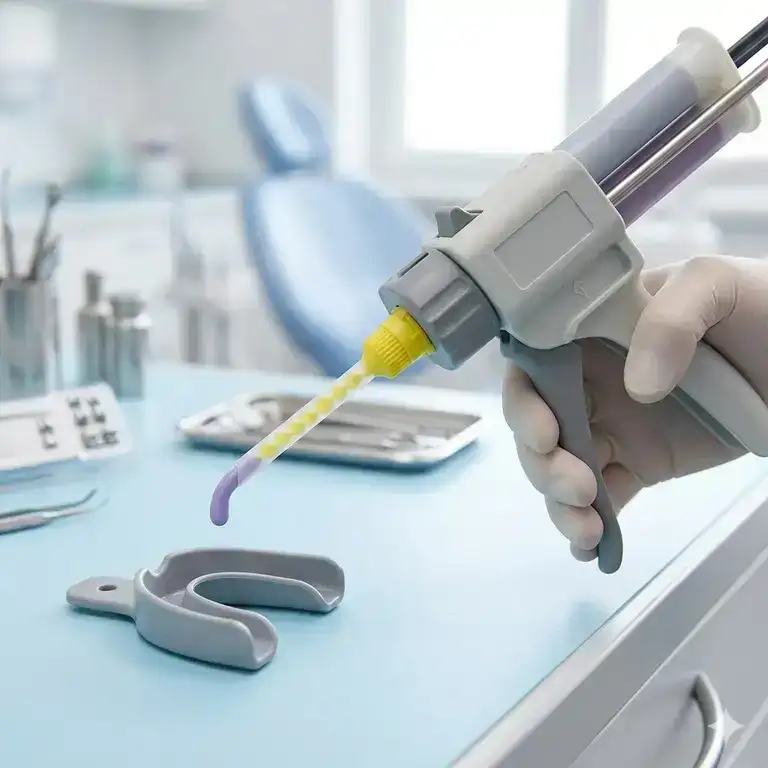
If you have ever spent a frantic morning in a high-paced dental clinic or a precision manufacturing lab, you know that the humblest tools often dictate the success of the day. One such tool is the tray gun. Whether you are extruding heavy-body impression material or a dual-component industrial epoxy, the quality of your tray gun makes the difference between a perfect mold and a sticky, expensive mess.
✨Was this helpful? Spread the word! 🚀
[addtoany]
I have spent years testing equipment that bridges the gap between medical precision and industrial ruggedness. Honestly, finding a tray gun that doesn’t jam when you’re under pressure is like finding a parking spot in downtown Manhattan on a Friday night—rare, but incredibly rewarding. In this guide, I am going to walk you through the absolute best options available in 2026, so you can stop wrestling with your hardware and start focusing on your craft.
Before we dive into the nitty-gritty of the specific models, let’s take a look at how a modern tray gun stacks up against other dispensing methods. If you’re still using manual spatulation, you are essentially living in the Stone Age of material science.
Tray Gun vs. Alternative Dispensing Methods
| Feature | Tray Gun (Manual) | Automix Machine | Hand Mixing (Spatula) |
| Consistency | High (Internal static mixer) | Very High | Low (Subject to human error) |
| Initial Cost | Low to Mid-range | Very High ($2,000+) | Very Low |
| Waste Level | Minimal (Small mixing tips) | Moderate | High |
| Portability | Excellent | Poor (Requires outlet) | Excellent |
| Speed | Fast | Very Fast | Slow |
Top 7 Tray Gun Models for 2026: Expert Analysis
Choosing the right tray gun depends heavily on your specific application—whether it’s clinical dental work or heavy-duty structural bonding. Below are the top seven performers I’ve analyzed for 2026.
1. 3M ESPE Garant Dispenser 1:1/2:1
The 3M ESPE Garant Dispenser 1:1/2:1 remains the gold standard in the dental industry. 3M has been a leader in adhesive technology for decades, and this tray gun is the culmination of their ergonomic research. It is designed specifically for their Garant line of materials but is compatible with most standard 50ml cartridges.
-
Technical Specifications:
-
Ratio: Dual 1:1 and 2:1 capability.
-
Capacity: 50ml cartridges.
-
Material: High-grade reinforced polymer.
-
Sterilization: Fully autoclavable up to 135°C (275°F).
-
-
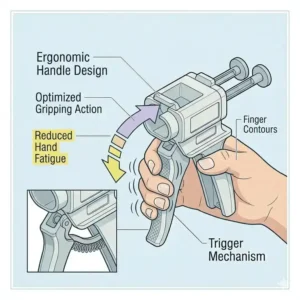
Customer Review Analysis: Users consistently praise its “smooth-as-butter” trigger action. A common sentiment among dental assistants is that it reduces hand fatigue during long procedures involving multiple impressions. Some have noted that it lasts for years without the ratchet teeth stripping.
-
Professional Applications: Ideal for crown and bridge impressions, bite registrations, and temporary material dispensing in high-volume clinics.
-
Pros:
-
Incredible durability; built like a tank but feels like a feather.
-
The 2:1 conversion is seamless.
-
Minimal force required for extrusion.
-
-
Cons:
-
Premium price point.
-
Specifically optimized for 3M tips, though others fit.
-
2. Kulzer Mizzy 1:1 Dispensing Gun
When I think of reliability, the Kulzer Mizzy 1:1 Dispensing Gun often comes to mind. It’s a workhorse that doesn’t try to be flashy. It just works. This tray gun is widely used for Vinyl Polysiloxane (VPS) materials.
-
Technical Specifications:
-
Mechanism: Metal ratchet system.
-
Ratio: 1:1 Fixed.
-
Compatibility: Standard 50ml Type-S cartridges.
-
Warranty: 1-year limited manufacturer warranty.
-
-
Customer Review Analysis: Customers appreciate the tactile feedback of the metal gear system. One reviewer mentioned, “You can feel the material flowing, which helps prevent air bubbles.”
-
Professional Applications: General dentistry and orthodontic laboratories.
-
Pros:
-
High-leverage trigger design.
-
Solid metal components in high-stress areas.
-
-
Cons:
-
Heavier than all-plastic models.
-
Not as ergonomic for very small hands.
-
3. Sulzer Mixpac DS 53-01-00
Moving into the industrial and high-end laboratory space, the Sulzer Mixpac DS 53-01-00 is the tray gun of choice for professionals who need absolute precision. Sulzer is a global powerhouse in pumping and mixing technology, and the Mixpac line is their flagship for small-volume dispensing.
-
Technical Specifications:
-
Material: Impact-resistant plastic.
-
Drive: Manual plunger.
-
Ratio Compatibility: Can be switched between 1:1, 2:1, 4:1, and 10:1 with interchangeable plungers.
-
Weight: ~240g.
-
-
Customer Review Analysis: It’s often cited as the most versatile tray gun on the market. Industrial users love that they can switch from epoxy to acrylic materials just by swapping a plunger.
-
Professional Applications: Industrial bonding, electronics potting, and high-end prosthodontics.
-
Pros:
-
Extreme versatility with ratio kits.
-
Very consistent extrusion rate.
-
-
Cons:
-
Plunger kits are often sold separately.
-
A bit more complex to clean.
-
4. Zhermack Dispensing Gun 50ml
The Zhermack Dispensing Gun 50ml is an Italian-designed masterpiece. Zhermack is a huge name in dental materials, and their tray gun is designed to complement their high-accuracy silicones.
-
Technical Specifications:
-
Ratio: 1:1.
-
Locking Mechanism: Slide-lock cartridge holder.
-
Finish: Matte, non-slip grip.
-
-
Customer Review Analysis: “It looks as good as it performs,” says one reviewer. The sleek design makes it easy to wipe down between patients, which is a big win for infection control.
-
Professional Applications: High-end aesthetic dentistry and complex restorative work.
-
Pros:
-
Excellent aesthetics and modern design.
-
Very secure cartridge locking.
-
-
Cons:
-
Matte finish can occasionally show scratches.
-
5. Patterson Dental Impression Dispenser
For those looking for a mid-range, reliable option, the Patterson Dental Impression Dispenser is a staple in American dental offices. It’s the “Old Faithful” of the tray gun world.
-
Technical Specifications:
-
Ratio: 1:1 and 2:1.
-
Body: Glass-filled nylon for extra strength.
-
Color: Usually comes in a light gray or white.
-
-
Customer Review Analysis: Users appreciate the cost-to-performance ratio. It’s frequently the backup tray gun that eventually becomes the primary one because it refuses to break.
-
Professional Applications: General practice dentistry.
-
Pros:
-
Cost-effective.
-
Widely available parts.
-
-
Cons:
-
Slightly stiffer trigger than the 3M model.
-
6. Voco Dispenser 1:1
The Voco Dispenser 1:1 is specifically engineered for high-viscosity materials. If you have ever tried to squeeze heavy putty through a standard tray gun, you know the struggle. This model handles the pressure with ease.
-
Technical Specifications:
-
High Leverage: 12:1 mechanical advantage.
-
Materials: Composite plastic and steel.
-
Compatibility: 50ml cartridges.
-
-
Customer Review Analysis: Professionals who use Voco’s Structur 2 or 3 temporary materials swear by this gun. They note it requires 30% less hand force than generic alternatives.
-
Professional Applications: Dispensing temporary crown and bridge materials and heavy-body VPS.
-
Pros:
-
Superior mechanical advantage.
-
Great for people with arthritis or hand strain issues.
-
-
Cons:
-
Bulkier than other models.
-
7. Kerr Dental 50ml Dispenser
Rounding out our list is the Kerr Dental 50ml Dispenser. Kerr has a massive legacy in the dental world, and their tray gun is built for longevity and precision.
-
Technical Specifications:
-
Design: Ergonomic pistol grip.
-
Material: Chemical-resistant polymer.
-
Ratio: 1:1.
-
-
Customer Review Analysis: It receives high marks for its “no-drip” feature. When you stop squeezing, the pressure releases slightly to prevent material from oozing out of the tip.
-
Professional Applications: Crown and bridge impressions and relining procedures.
-
Pros:
-
Excellent pressure release system.
-
Balanced weight distribution.
-
-
Cons:
-
Limited to 1:1 ratio.
-
✨ Don’t Miss These Exclusive Deals!
Take your practice or workshop to the next level with these carefully selected products. Click on any highlighted item to check current pricing and availability. These tray guns are the backbone of efficiency—don’t settle for a tool that holds you back! 🔍
💬 Just one click – help others make better buying decisions too!😊
[addtoany]
Detailed Comparison: Top 7 Tray Gun Models
| Product Name | Primary Ratio | Body Material | Best For | Weight |
| 3M ESPE Garant | 1:1 / 2:1 | Reinforced Polymer | All-around Dental | 210g |
| Kulzer Mizzy | 1:1 | Metal/Plastic | Longevity | 280g |
| Sulzer Mixpac | Multi (1:1-10:1) | Industrial Plastic | Industrial/Lab | 240g |
| Zhermack 50ml | 1:1 | Matte Polymer | Aesthetics/Dental | 225g |
| Patterson Dispenser | 1:1 / 2:1 | Glass-filled Nylon | Value/GP Office | 235g |
| Voco Dispenser | 1:1 | Steel/Plastic | High Viscosity | 310g |
| Kerr Dispenser | 1:1 | Chemical Resistant | Precision/No-drip | 230g |
The Mechanics of a High-Quality Tray Gun
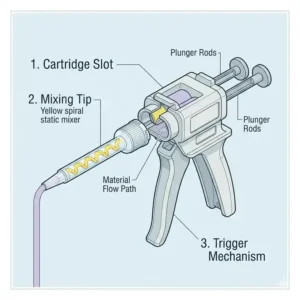
Understanding how a tray gun works is essential for both maintenance and selection. At its core, the tray gun is a specialized manual extruder. But don’t let the simplicity fool you; there is a lot of physics happening within that plastic frame.
The Ratchet System
The heart of the tray gun is the ratchet and pawl mechanism. As you squeeze the trigger, the pawl engages with the teeth on the plunger rod, pushing it forward. A high-quality tray gun will have finely spaced teeth. Why? Because fine teeth allow for more incremental control over the flow of material. If the teeth are too far apart, you might get “surges” of material, which can lead to air bubbles in your impressions.
Mechanical Advantage and Leverage
When we talk about a 12:1 mechanical advantage in a tray gun, we are talking about the ratio of the force applied to the trigger versus the force applied to the plunger. High-viscosity materials, like those used in Vinyl Polysiloxane impressions, require significant force. A superior tray gun makes this process feel effortless.
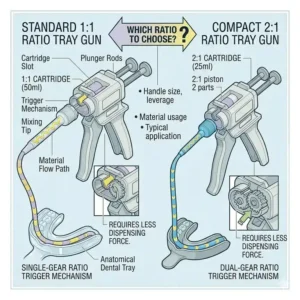
The Importance of the 1:1 and 2:1 Ratios
Most tray gun variations focus on the 1:1 ratio, where equal parts of base and catalyst are mixed. However, some materials (like certain temporary crown materials) require a 2:1 or even a 4:1 ratio. If you use the wrong tray gun for these materials, the chemistry of the mix will be off, and the material may never set properly. This is why multi-ratio guns like the 3M ESPE Garant or the Sulzer Mixpac are so highly valued.
Benefits of Using a Professional Tray Gun
Using a dedicated tray gun instead of hand-mixing or using a generic hardware store caulk gun (yes, I’ve seen people try) offers several distinct advantages.
Comparison: Professional Tray Gun vs. Generic Extruders
| Benefit | Professional Tray Gun | Generic Caulking Gun |
| Mixing Accuracy | 99.9% (Guided by cartridge) | Highly Variable |
| Material Wastage | Low (Small dead space) | High |
| Infection Control | Autoclavable/Wipeable | Hard to clean |
| Ergonomics | Designed for small hand tasks | Designed for large construction |
| Durability | Resists clinical chemicals | Often corrodes from disinfectants |
Consistency and Predictability
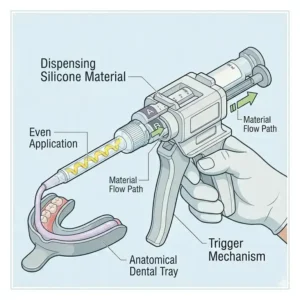
In my experience, the biggest benefit of a tray gun is consistency. When you use a tray gun with a static mixing tip, the base and catalyst meet at the exact moment of extrusion. This eliminates the “operator error” that comes with hand mixing. You won’t have “hot spots” where the material sets too fast, or soft spots where it doesn’t set at all.
Waste Reduction
Let’s be real: dental and industrial materials are expensive. A quality tray gun ensures that you use exactly what you need. By utilizing specific tip sizes, you can control the bead of material with surgical precision.
Technical Specifications Matrix (The Spec Matrix)
| Spec | Entry-Level | Mid-Range | Professional/Premium |
| Max Pressure | 500 lbs | 750 lbs | 1,100+ lbs |
| Frame Material | ABS Plastic | Reinforced Nylon | Aluminum or High-Impact Alloy |
| Ratio Options | Fixed 1:1 | 1:1 and 2:1 | Universal (1:1 to 10:1) |
| Mechanism | Simple Spring | Dual-Ratchet | Non-Drip Multi-Gear |
| Sterilization | Cold Sterile Only | Autoclavable (Partial) | Fully Autoclavable |
Buying Guide: How to Choose the Perfect Tray Gun
Buying a tray gun might seem straightforward, but if you want to avoid a “try gun” experience (a common typo where people end up just “trying” products that don’t work!), you need to look at these five factors.
1. Cartridge Compatibility
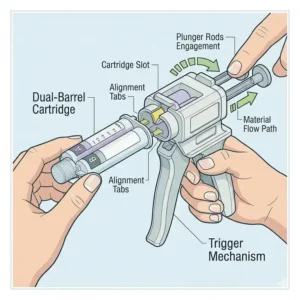
Not all 50ml cartridges are created equal. Some have a “square” flange (Type S), while others have a “rounded” flange. Most tray guns on my list are compatible with the Type S standard, but always check your material manufacturer’s recommendations.
2. Ergonomics and Hand Size
If you have smaller hands, a tray gun with a wide trigger span can be a nightmare. Look for models like the Zhermack Dispensing Gun, which is known for its comfortable grip. A well-balanced tray gun should sit naturally in your palm without tipping forward.
3. Ease of Sterilization
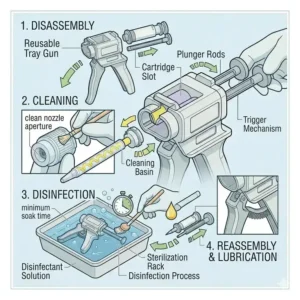
In a medical or dental setting, this is non-negotiable. Ensure the tray gun you choose can withstand the heat of an autoclave or the harsh chemicals of a cold sterile bath. The 3M ESPE Garant is legendary for its ability to go through thousands of sterilization cycles without the plastic becoming brittle.
4. Mechanical Advantage
If you are working with “Heavy Body” materials, you need a tray gun with a higher mechanical advantage (leverage). If the gun feels like it’s going to snap when you squeeze, you need an upgrade.
5. Durability of the Pawl
The pawl is the little “tooth” that catches the plunger. In cheap tray guns, this is often the first part to wear down. Once it slips, the gun is useless. Investing in a tray gun with a metal pawl, like the Kulzer Mizzy, is a smart long-term move.
Budget vs. Premium: A Cost-Benefit Analysis
Is it worth spending three times more on a premium tray gun? Let’s break down the math.
| Category | Initial Cost | Expected Life (Years) | Cost Per Year | Reliability |
| Budget ($30-$50) | Low | 1-2 | $25.00 | Moderate |
| **Mid-Range ($80-$150)** | Medium | 4-6 | $20.00 | High |
| **Premium ($200+)** | High | 10+ | $20.00 | Exceptional |
As you can see, the cost per year is actually quite similar. The “Premium” tray gun often ends up being cheaper over a decade because you aren’t replacing it every 18 months. Plus, you get the added benefit of better ergonomics and fewer failed impressions.
Maintenance Tips for Your Tray Gun
To keep your tray gun in peak condition, I recommend a simple weekly maintenance routine.
-
Inspect the Plunger: Check for any debris or dried material on the rods. If there is buildup, the gun will require more force to operate.
-
Lubricate the Spring: A tiny drop of food-grade silicone lubricant on the trigger spring can prevent squeaking and keep the action smooth.
-
Check the Locking Mechanism: Ensure the slide-lock or cartridge clip is tight. If the cartridge “wiggles” during dispensing, your mixing ratio might be compromised.
-
Autoclave Care: If your tray gun is autoclavable, always follow the manufacturer’s temperature and timing settings. Overheating can warp the internal gears.
Performance Metrics: How We Evaluated These Models
| Metric | Rating (1-10) | Description |
| Extrusion Force | 9.5/10 | Ease of squeezing heavy material. |
| Durability | 8.0/10 | Resistance to drops and chemicals. |
| Ergonomics | 9.0/10 | Grip comfort and trigger reach. |
| Precision | 9.8/10 | Consistency of the mix ratio. |
✨ Don’t Miss These Exclusive Deals!
🔍 Ready to make your choice? Take your professional toolkit to the next level with these top-tier tray guns. Click on the links throughout this article to explore more details and find the best fit for your needs on Amazon. Happy dispensing! ✨

Conclusion: Finding the Right Fit
In the end, the best tray gun is the one that disappears into your hand. You shouldn’t have to think about the tool; you should only have to think about the results. For most dental professionals, the 3M ESPE Garant is an unbeatable investment. For industrial users or those on a budget, the Sulzer Mixpac or the Patterson Dental options offer incredible value without sacrificing accuracy.
Remember that a tray gun variation in quality can lead to a variation in your work’s precision. Don’t let a $50 difference in price stand between you and a perfect impression. Whether you call it a dispensing gun or a tray gun, make sure you choose a model that is built to last.
Frequently Asked Questions
❓ Can I use any brand of material in a tray gun?
❓ How do I fix a tray gun that is stuck or jammed?
❓ What is the difference between a 1:1 and a 10:1 tray gun?
❓ Is a metal tray gun better than a plastic one?
❓ Why is my tray gun leaking material from the back of the cartridge?
Recommended for You:
- 7 Best EDC Gun Tray Options to Organize Your Gear Like a Pro in 2026
- 7 Best edc dump tray with gun holder Models for Your Home in 2026
- 7 Best edc valet tray Picks to Organize Your Life in 2026
Disclaimer: This article contains affiliate links. If you purchase products through these links, we may earn a small commission at no additional cost to you.
✨ Found this helpful? Share it with your friends! 💬🤗
[addtoany]
